
Monocrystalline and Polycrystalline silicon are the two most mainstream types of solar panels today.
In short: Monocrystalline panels offer higher efficiency and a longer lifespan but are more expensive; Polycrystalline panels are more affordable and cost-effective, though they lag slightly in efficiency and durability. There is no absolute “better” option—it primarily depends on your budget, available installation space, and environmental conditions.
1. Appearance
-
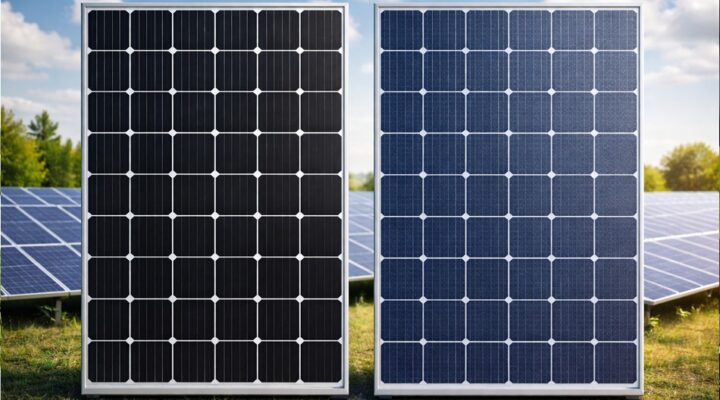
Monocrystalline: Pure black or deep blue with a uniform color. The cells usually have rounded corners (due to the cylindrical shape of the silicon ingots).
-
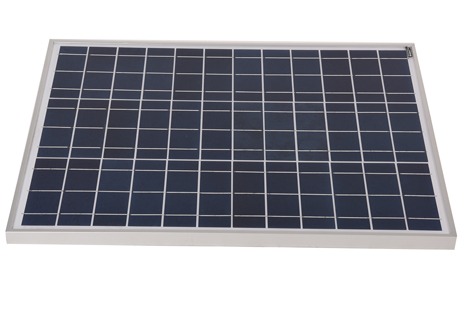
Polycrystalline: Bright blue with a “snowflake” or mosaic texture on the surface. The cells are perfectly rectangular (straight corners).
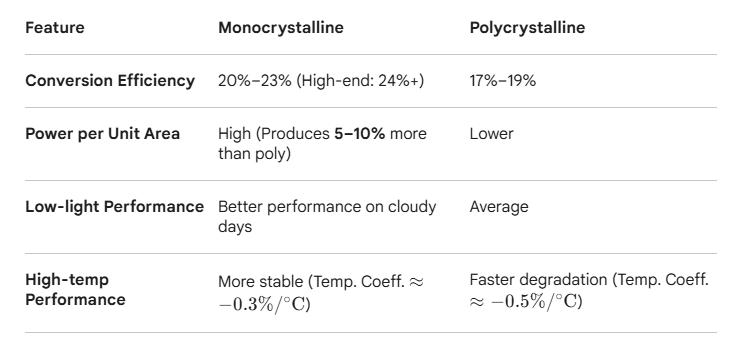
2. Efficiency & Power Generation
3. Lifespan & Degradation
-
Monocrystalline:
-
Standard Lifespan: 25–30+ years.
-
Annual Degradation: 0.3%–0.5% (Retains approx. 85%–90% power after 25 years).
-
-
Polycrystalline:
-
Standard Lifespan: 20–25 years.
-
Annual Degradation: 0.5%–0.8% (Retains approx. 75%–80% power after 25 years).
-
4. Price
-
Monocrystalline: More expensive, typically 10%–20% higher per watt or per system.
-
Polycrystalline: Cheaper with high cost-performance (value for money).
5. Space Requirements
-
Monocrystalline: Space-saving. Because of the higher efficiency, you need fewer panels to meet your power requirements.
-
Polycrystalline: Space-intensive. To achieve the same power output, you will need more panels and a larger installation area.
